Level design / 2026
Escape
Escape is a linear third-person survival level built in Unreal Engine 5.5 on the AGLS framework. In July 2030 a new virus has emptied the cities. Luke, out of ammunition and hunted by the Grey Falcon mercenaries, runs through a forest and down into the infected metro tunnels beneath it. Players must keep moving: climb and vault through the trees, scavenge weapons and supplies underground, fight or slip past the infected, find fuel for a dead generator room and face the ambush waiting in the flooded channel.
Play-through
Watch on YouTubeHosted on YouTube. The player loads when you press play.
Process
The level is mainly inspired by The Last of Us Part I and II. I studied public talks and videos by its level designers to learn their principles, and the resource management takes its cue from Resident Evil 4.
I planned eight areas, L1 to L8, and paced them as introduction, practice, mastery, twist, climax and resolution. The forest teaches traversal under pressure, because there is nothing to shoot with. The first room underground hands over weapons, a medkit and the first story letter together, and the first infected is seen facing away through a vent, so the player has time to plan. The metro is a wide arena for the first big fight, followed by a supply room to regroup. At the generator door the fighting stops: the player reads a fault report, uses pushable crates and finds a jerry can, which slows the pace before the boss fight in the train service pits. The level ends with the first fight against human enemies on the metro platform and a radio call that sets up a new threat.
Encounters are placed with trigger boxes. Each of the eight infected spawners wakes as the player passes, and the Grey Falcon's conversations start as the player approaches, so they are heard before they are seen. In Blueprints I made interaction work only beside each object, drove a double door with one Timeline and stopped story triggers from repeating. The route went through five saved iterations between 21 October and 2 November.
Level design breakdown
Story and motivation
In summer 2030, a new virus begins with fever and ends with patients no longer behaving like people. Hospitals seal their wards and survivors form small groups. Luke's friend is infected but has not fully transformed. Another survivor tells him that a serum in a tall hospital could still save his friend.
The Grey Falcon mercenaries believe Luke knows where the serum is. Their pursuit drives him into the forest, with the hospital visible as his distant goal. The only way forward leads down into the metro, where notes and environmental clues reveal what happened to people who tried to shelter underground.
The fault report beside the electronic door points to a generator without fuel. A warehouse locked from inside and a diary in the maintenance pits add the history of trapped survivors. These clues also support the immediate route: cross the infected metro, refuel the generator and reach the flooded channel, where the Grey Falcon is waiting.
The Last of Us Part I and II informed the level's traversal, encounters and environmental storytelling. Resident Evil 4 informed the management of ammunition and healing supplies.
Player and encounters
Luke can climb, vault, swim, use cover and push crates. Arriving with little ammunition makes the forest a chase instead of a shooting encounter. A pistol, rifle, medkit and Anderson's letter are placed together in the first underground room, linking new combat tools with the beginning of the story.
Scroll horizontally to see all columns.
| Threat | Count | Activation and purpose |
|---|---|---|
| Infected | 8 spawners | Eight independent trigger boxes wake their spawners as the player passes, keeping each fight tied to its intended space. |
| Boss | 1 | Waits beyond the generator room, in the train service pits. |
| Grey Falcon | 3 spawners | Two conversation triggers and seven patrol points. A mercenary establishes the pursuit in the forest; the later patrols occupy the flooded channel and platform. |
Infected pressure is spatially controlled rather than triggered all at once. The mercenaries behave differently: their approaching conversations can be heard before they can be seen, giving the player time to locate them and plan a route.
Mechanics and resource placement
Traversal under pressure
Climbing and vaulting carry the forest chase. One-way drops commit the player to the route, while flooded passages change movement speed and can conceal the player from mercenaries.
Combat choices
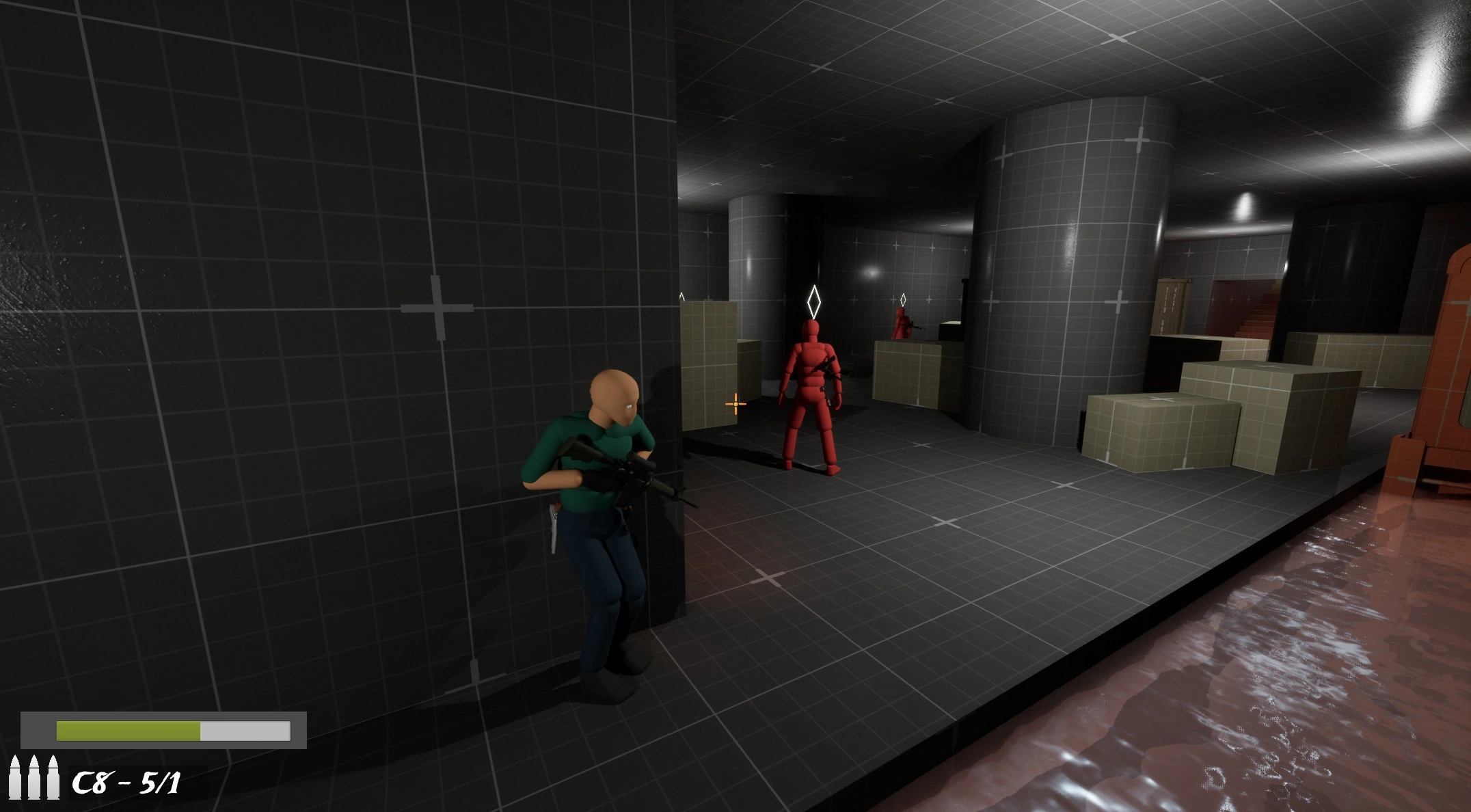
Walls, columns and crates provide cover and kiting routes. Frag grenades deal with infected groups; smoke interrupts line of sight for avoidance or a closer approach.
Scavenging and recovery
Metro lockers and three cabinets in the generator area hold supplies. Ammunition controls tension; medkits and safer supply rooms let the player recover after demanding fights.
Environmental interaction
Pushable crates open routes in the generator and boss areas. The fuel can and unpowered door turn the generator room into a quieter problem to solve rather than another combat arena.
Story guidance
Notes and subtitles carry the survivors' story and suggest the next goal. The first weapons appear together as a clear warning that fighting is about to begin.
Pacing the route
Introduction
Teach movement through a forest chase with nothing available to shoot.
Practice
Give the player weapons, healing and a note, then show the first infected facing away through a vent. The preview provides time to prepare.
Mastery
Increase arena size and overlapping enemy pressure. Require ammunition, grenade and health decisions while the player learns to use the environment.
Twist
Stop the fighting at an unpowered door. Reading the fault report and finding fuel changes the task and slows the pace.
Climax
Put the largest infected encounter and the boss after the generator puzzle.
Resolution
Shift the threat from infected to people, then end on an unanswered radio call that suggests a larger pursuit.
Area by area
L1 · Forest and drainage entry
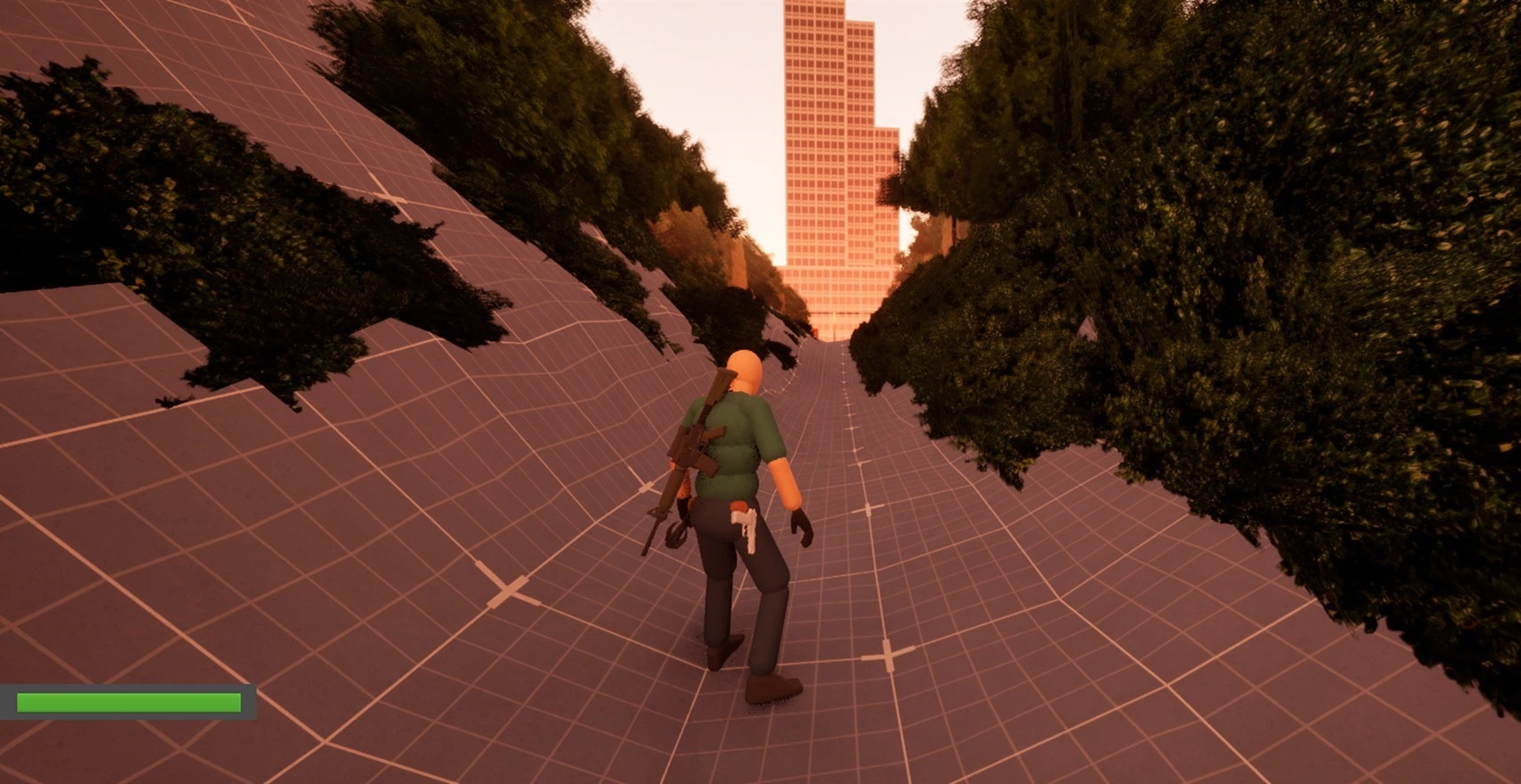
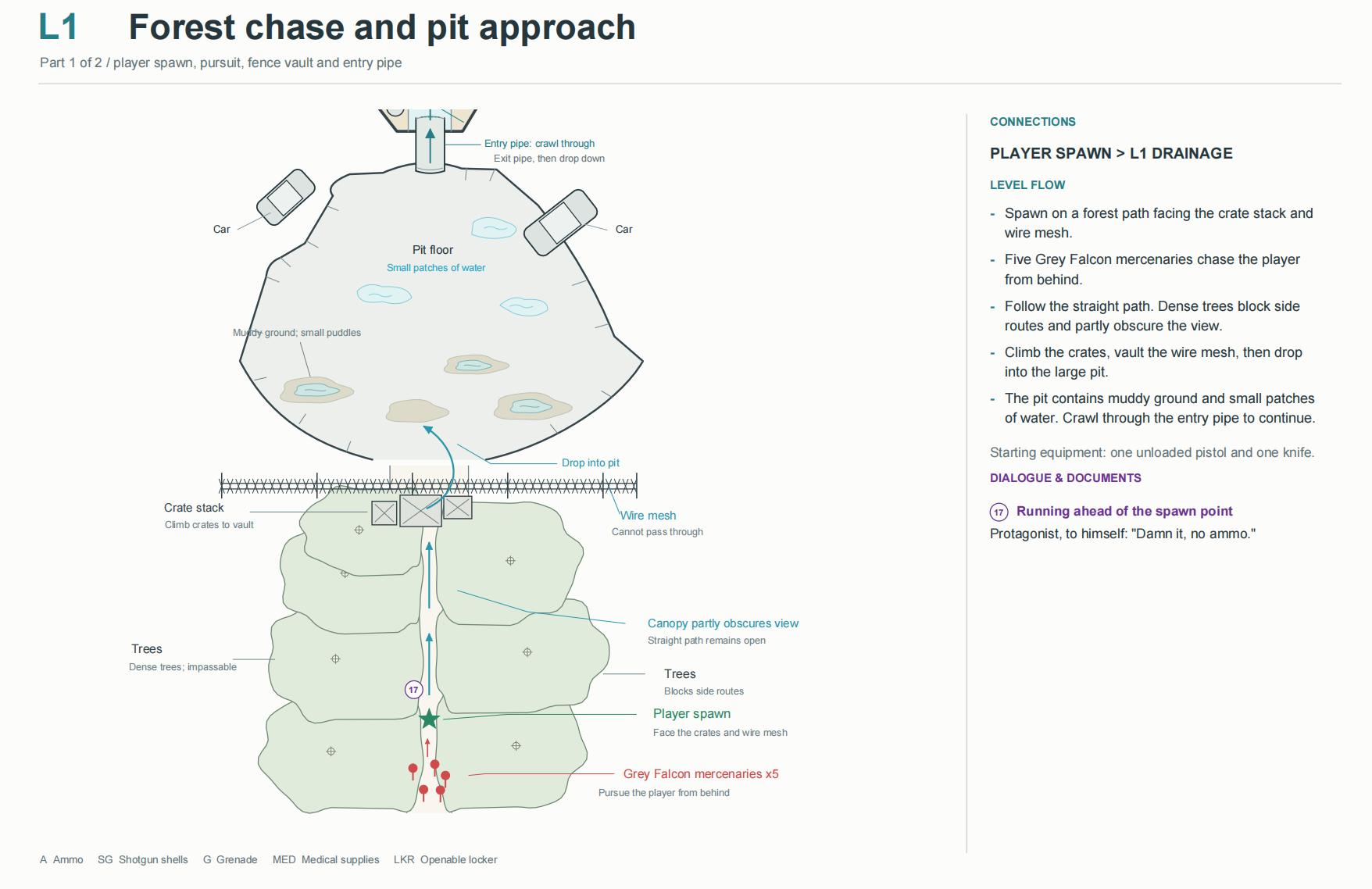
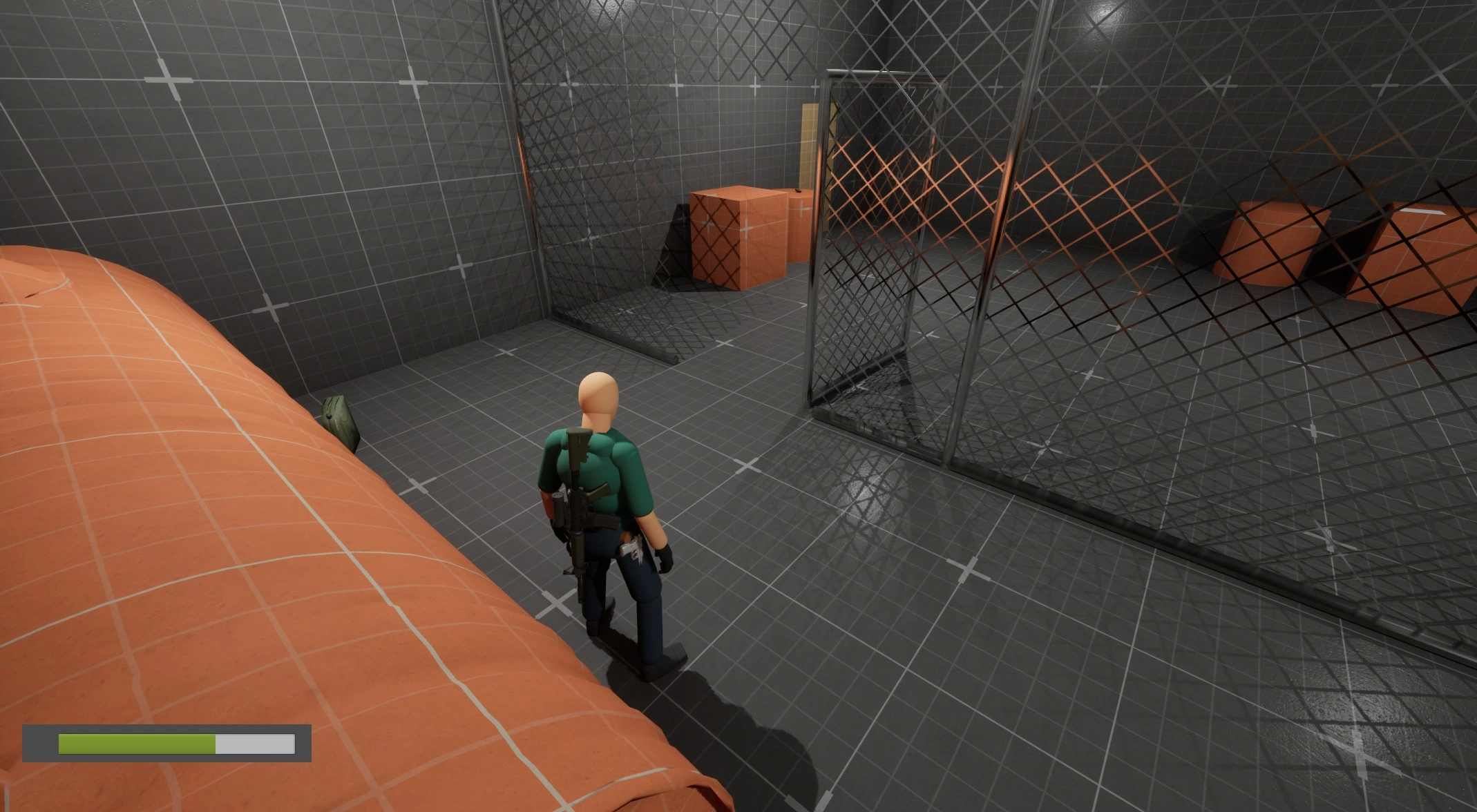
The opening line, “Damn, out of ammo”, establishes that Luke must run. Crates and wire mesh teach climbing and vaulting. The tall hospital is visible from the only open-sky area. A drop into the pit and water pipe commits the player to the metro and stops the pursuers from following directly.
L1 · Drainage maintenance room
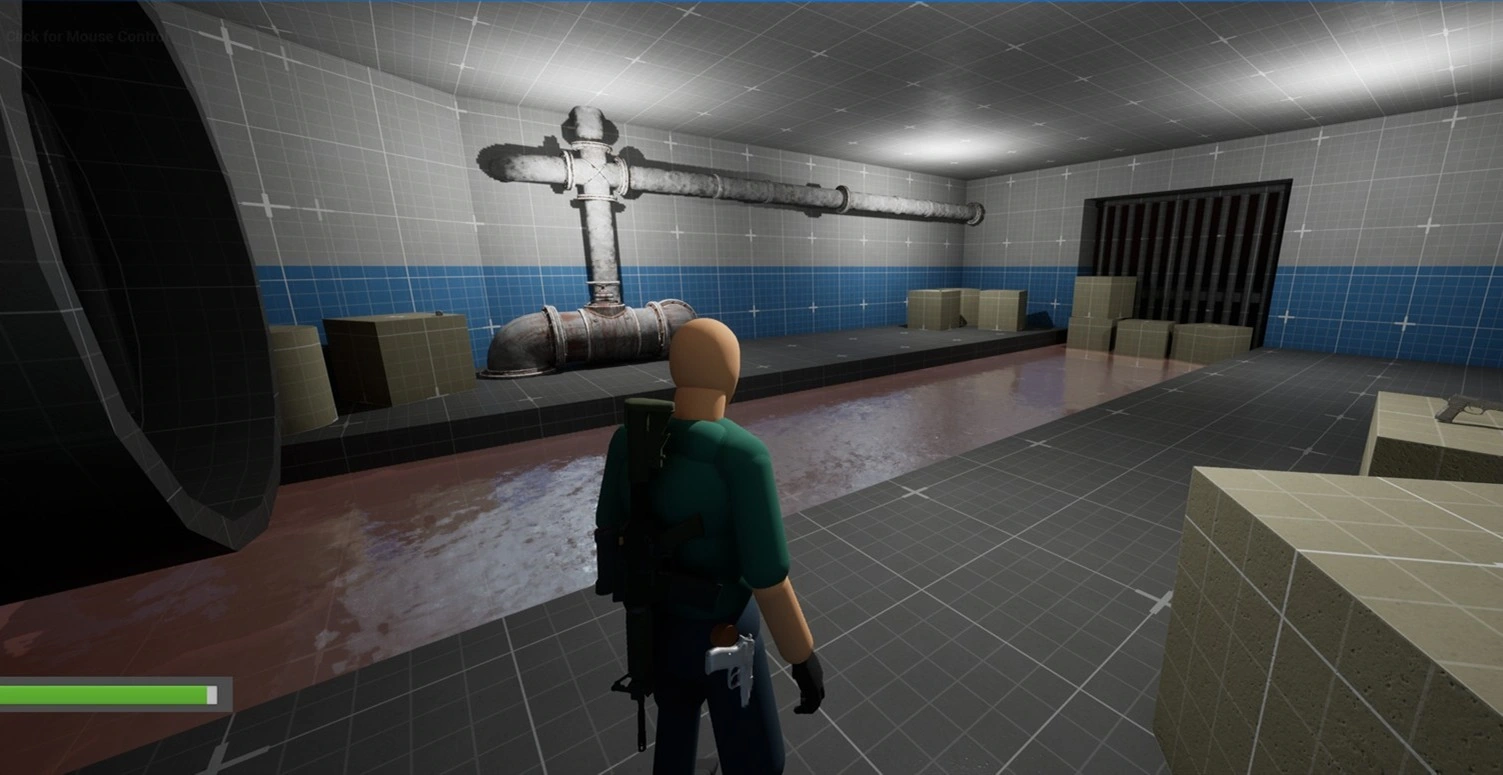
The pistol, rifle and medkit are within roughly ten metres of each other, beside Anderson's letter. Two doors later, the first infected appears through a vent with its back turned, combining a warning with a chance to plan the first fight.
L2 · Metro maintenance
The first large combat space asks the player to move between columns, crates and cover. A roller shutter closes behind the player after the drainage entry, preventing retreat through the opening route.
L3 · Handling and storage
A supply room after the metro provides a pause without enemies. Crawling beneath an obstacle leads into a smaller handling and storage fight, where terrain matters more. Stairs then lead toward the warehouse corridor.
L4 · Warehouse and generator
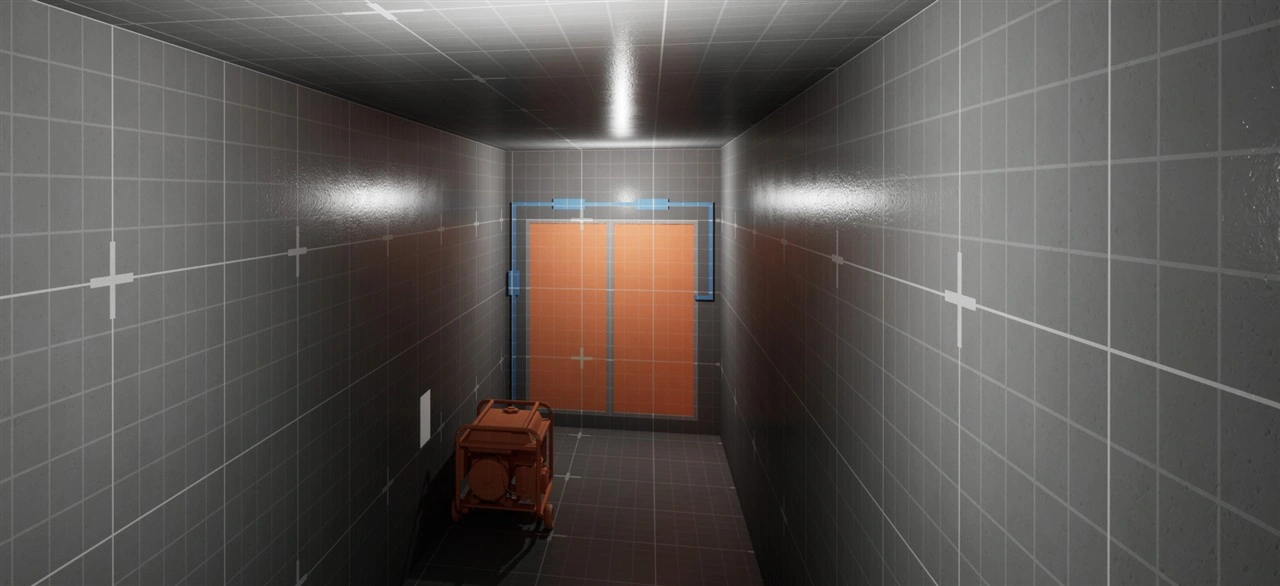
A fault report explains the dead power door. The player searches cabinets, moves crates and reaches the jerry can. The can and double door use the same nearby E interaction. This quieter puzzle creates space between the metro fights and the boss.
L5 · Train service pits
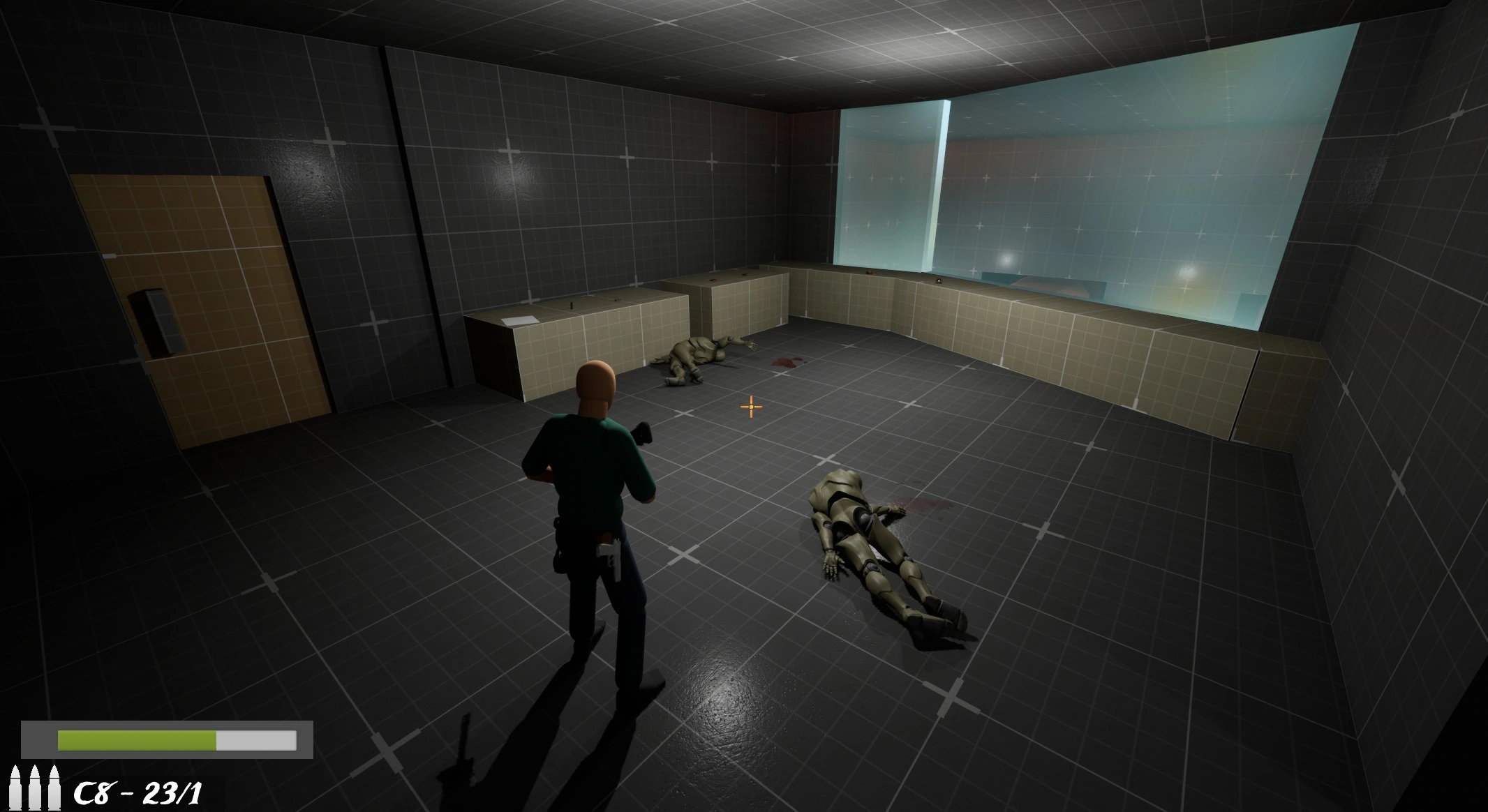
Two infected and supplies in the control room prepare the player for the main encounter. A window previews the boss before entry. The arena contains the largest enemy group and a varied supply of resources; a fence prevents the player from leaving the boss fight.
L6 · Rear service pits and supplies
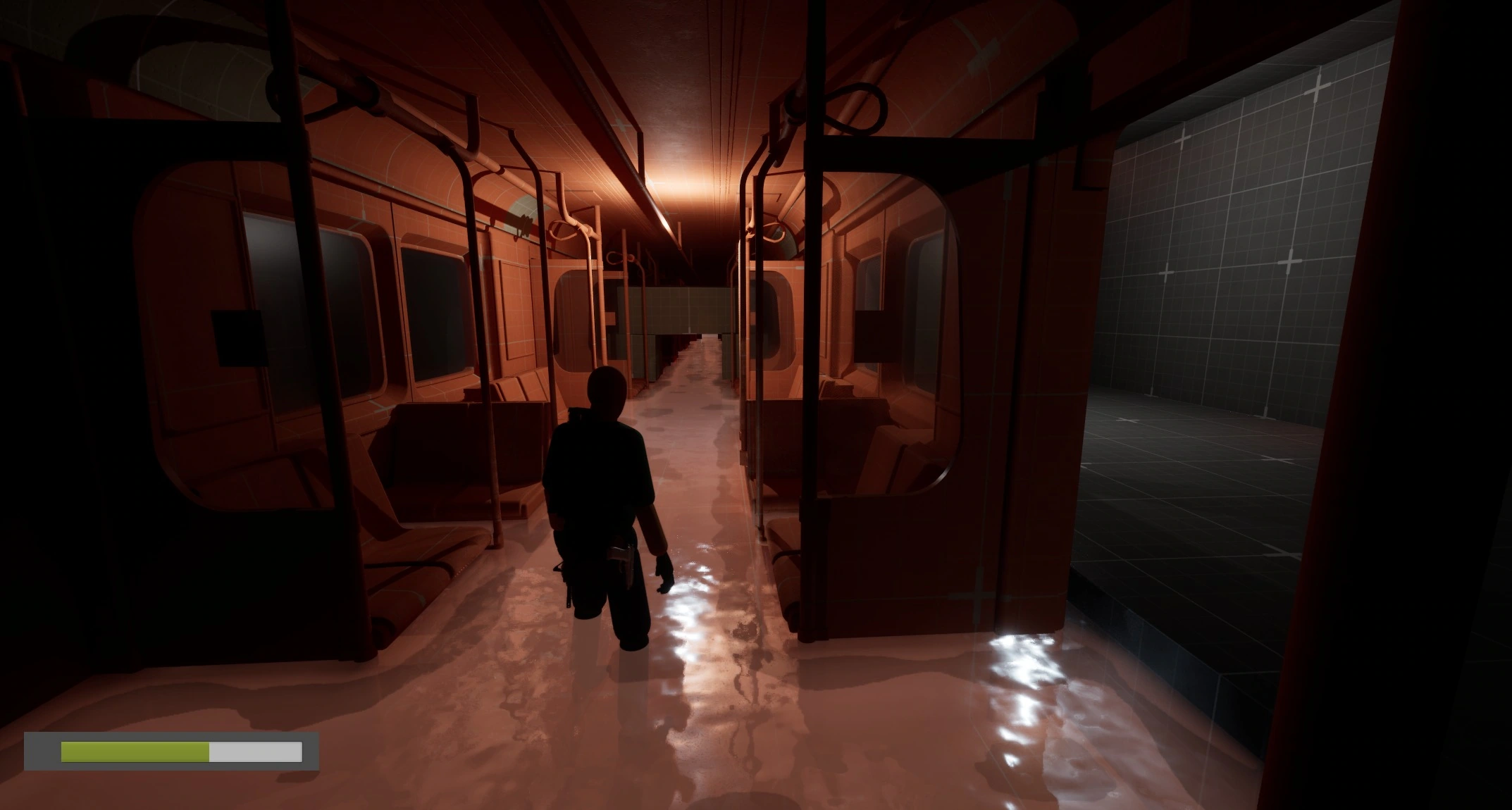
The route relaxes after the boss. A supply room on the right lets the player restock, then a swim through a flooded train carriage connects to the final areas.
L7–L8 · Flooded passage and platform
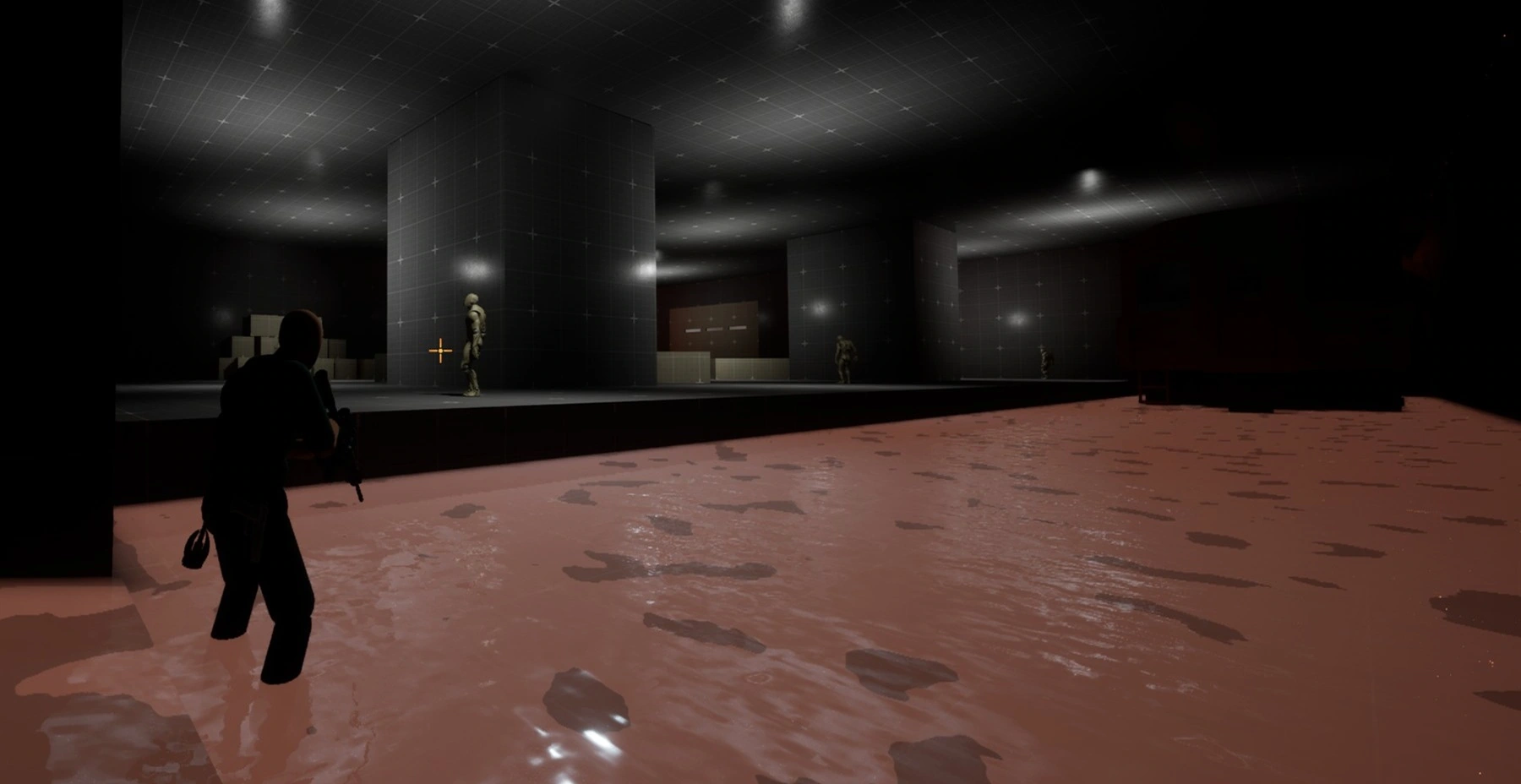
A cutscene of the Grey Falcon shooting an infected shows that the pursuit has reached the tunnels. Flooding changes movement and concealment before the first human fight on the platform. After the enemies are defeated, a radio asks whether they found Luke, leaving the next threat unresolved.
Blueprints and iteration
Nearby interaction
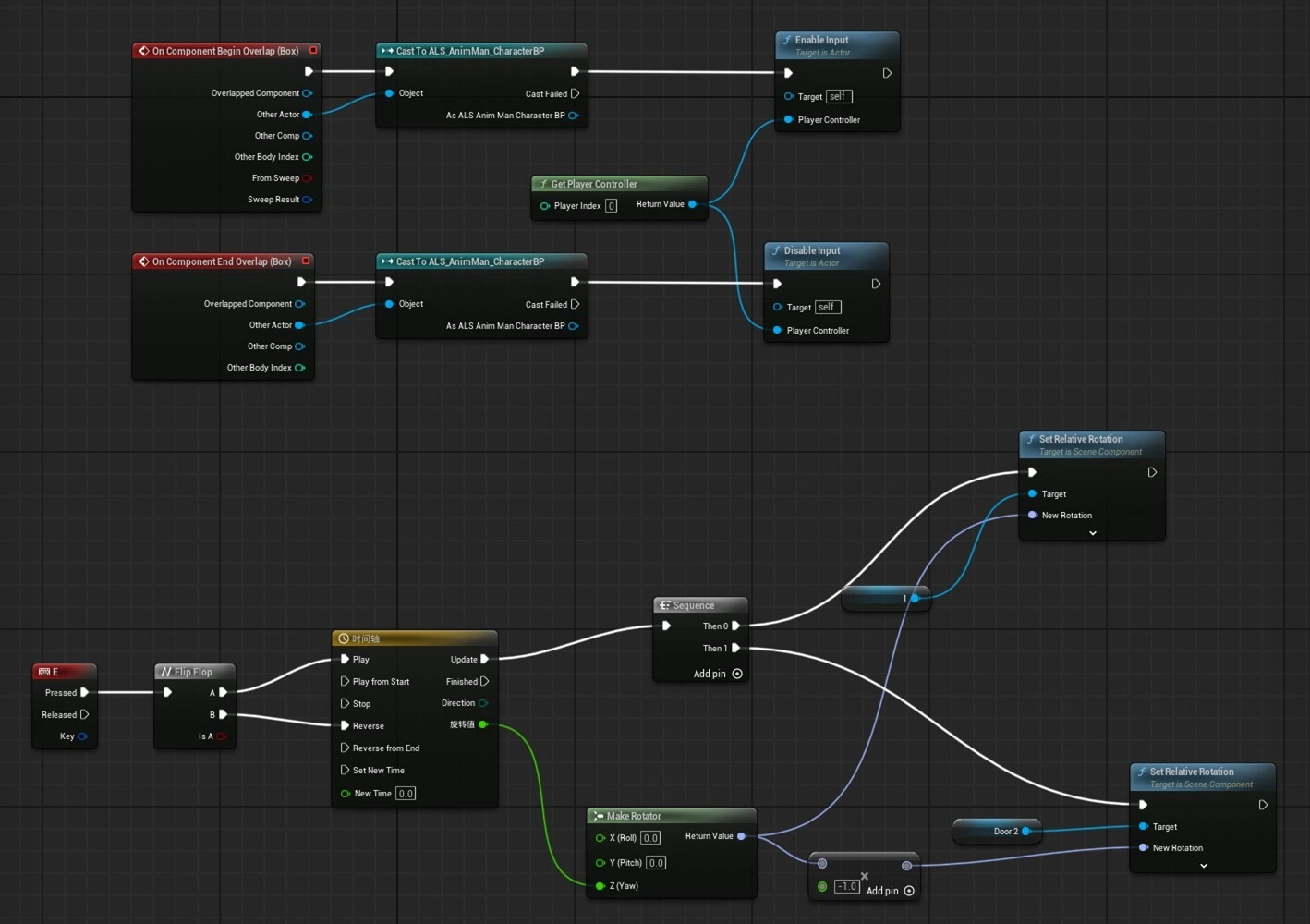
Each interactive Blueprint enables input when Luke enters its trigger box and disables input when he leaves. Pressing E therefore affects the object beside him.
Double generator door
BP_GeneratorDoor drives both leaves with one Timeline and Make Rotator. The second leaf receives the rotation multiplied by −1. A Flip Flop plays the Timeline forward or in reverse to open and close the door.
Fuel pickup
BP_Jerry uses the same proximity-trigger pattern; pressing E hides the can.
Non-repeating story triggers
Each plot trigger checks its IsTrigged flag before creating W_Subtitles, then sets that flag when the player leaves. Returning through the trigger does not repeat the line.
Scroll horizontally to see all columns.
| Date | Change |
|---|---|
| 21 October | Generator door. |
| 24 October | First saved route. |
| 26 October | Portal, container and glass assets. |
| 27 October | Story triggers, subtitles and notes. |
| 2 November | Metal door, jerry can and final story trigger. |
Project gallery
12 images · Click to explore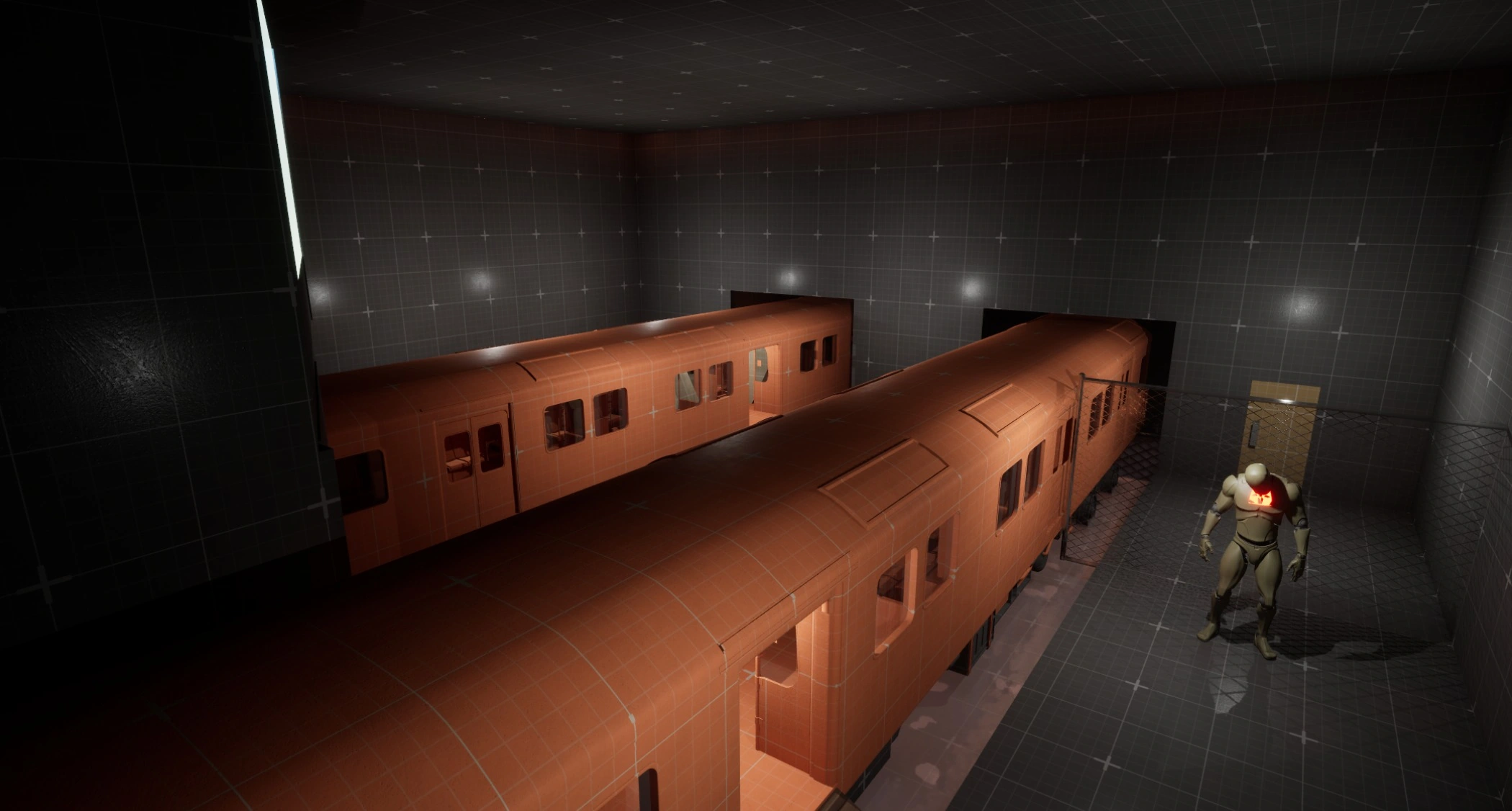

Result
A playable level of eight areas, with plans, pacing, game flow and Blueprint notes, shown in a play-through video.