Level design / 2026
Traverse
Traverse is a third-person survival combat level in Unreal Engine 5.8. The player breaks through layered blockades and overcomes obstacles to reach the final objective, managing resources against infected and human enemies, and unlocks a flashlight to deal with the infected in pitch-black areas. Traverse shares the background story and mechanics of my Escape project.
Play-through
Watch on YouTubeHosted on YouTube. The player loads when you press play.
Process
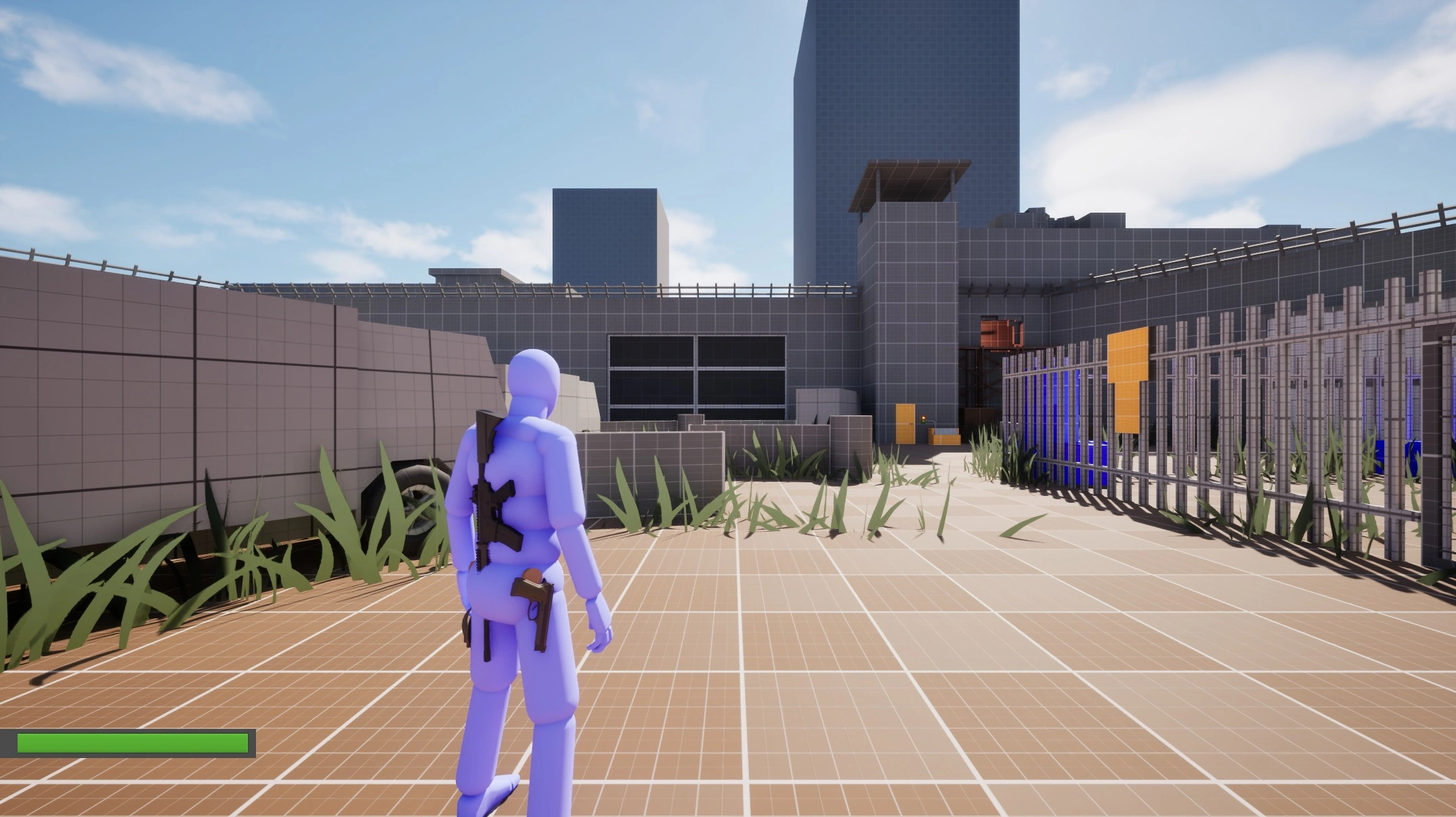
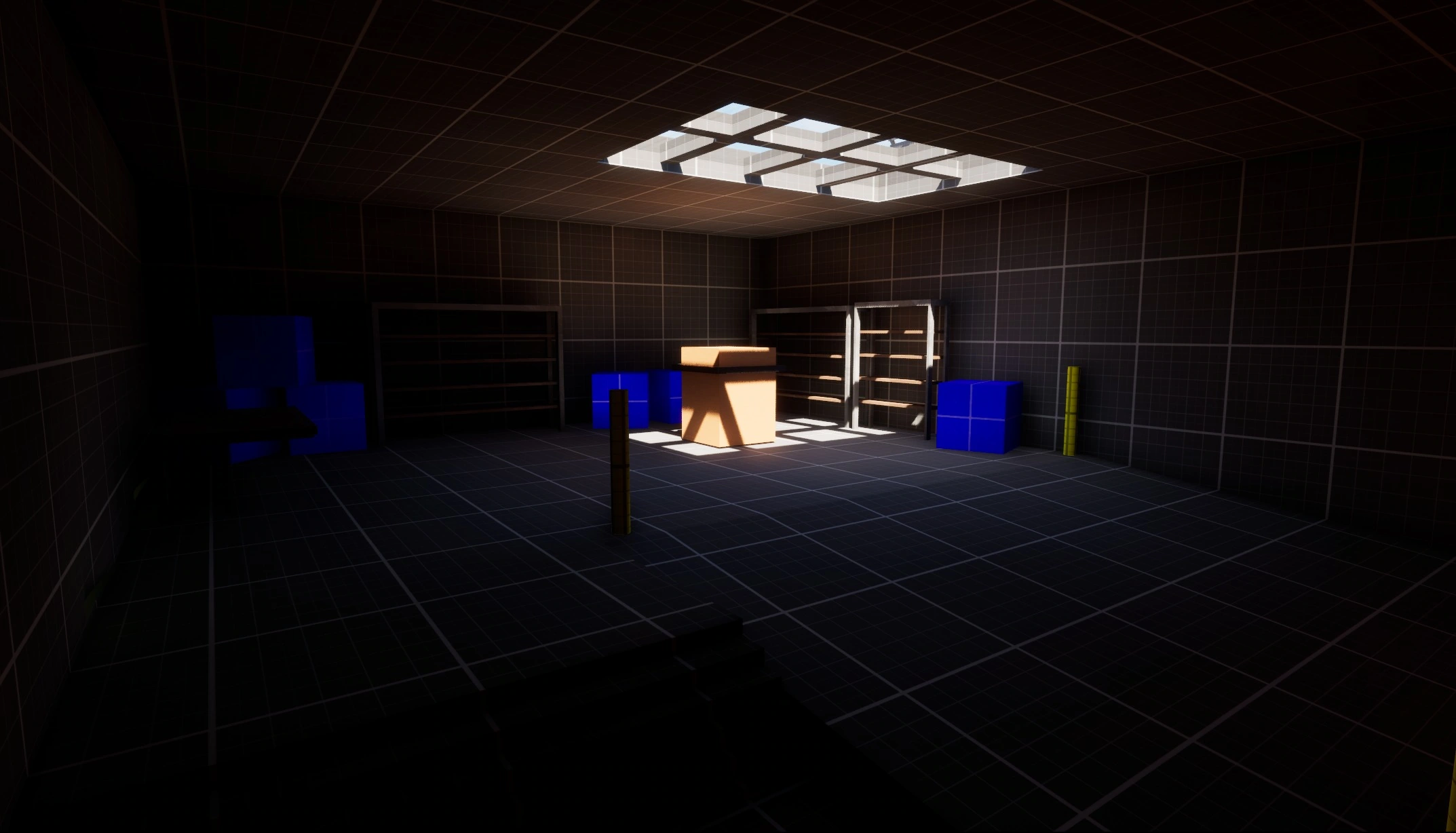
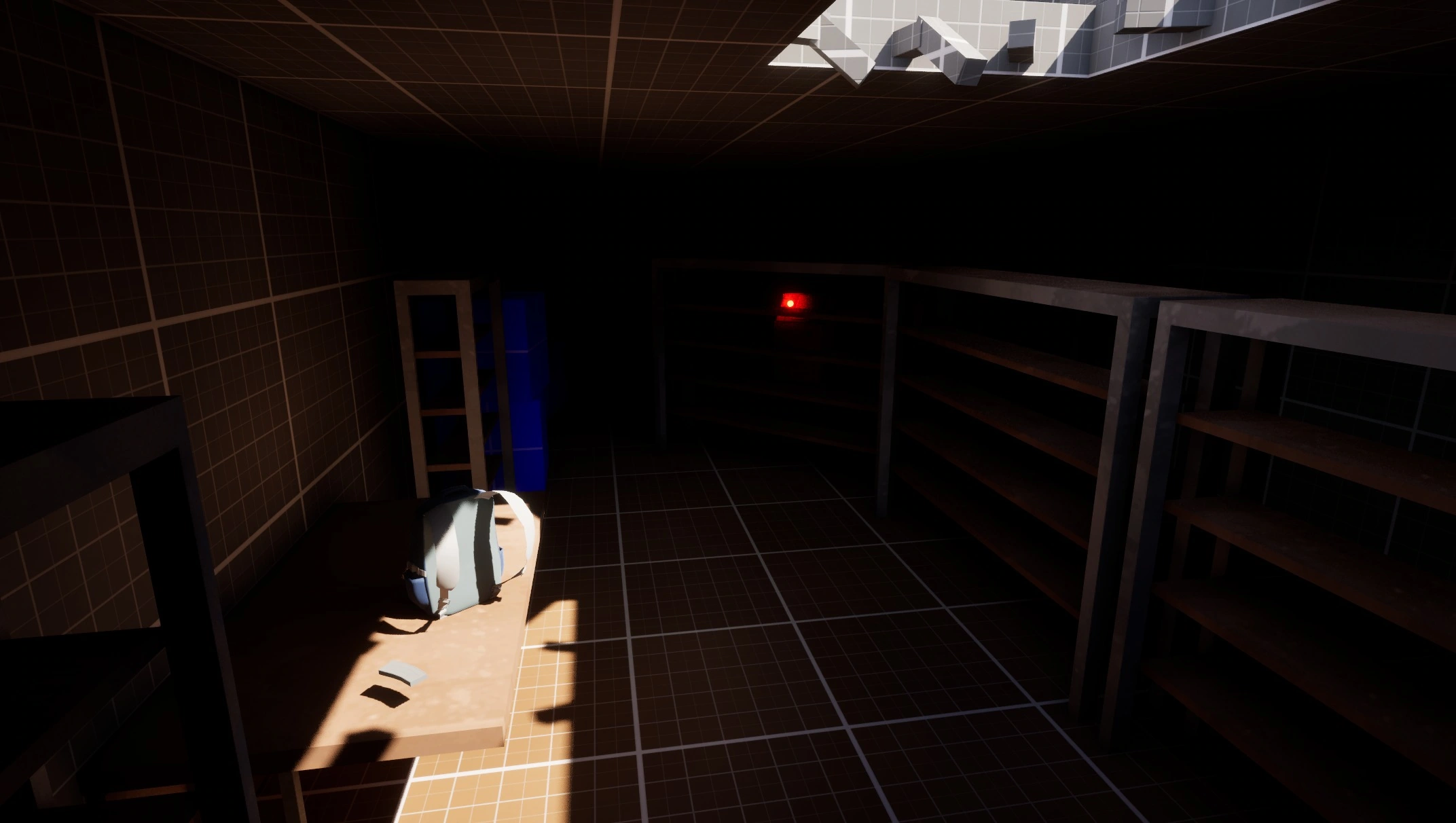
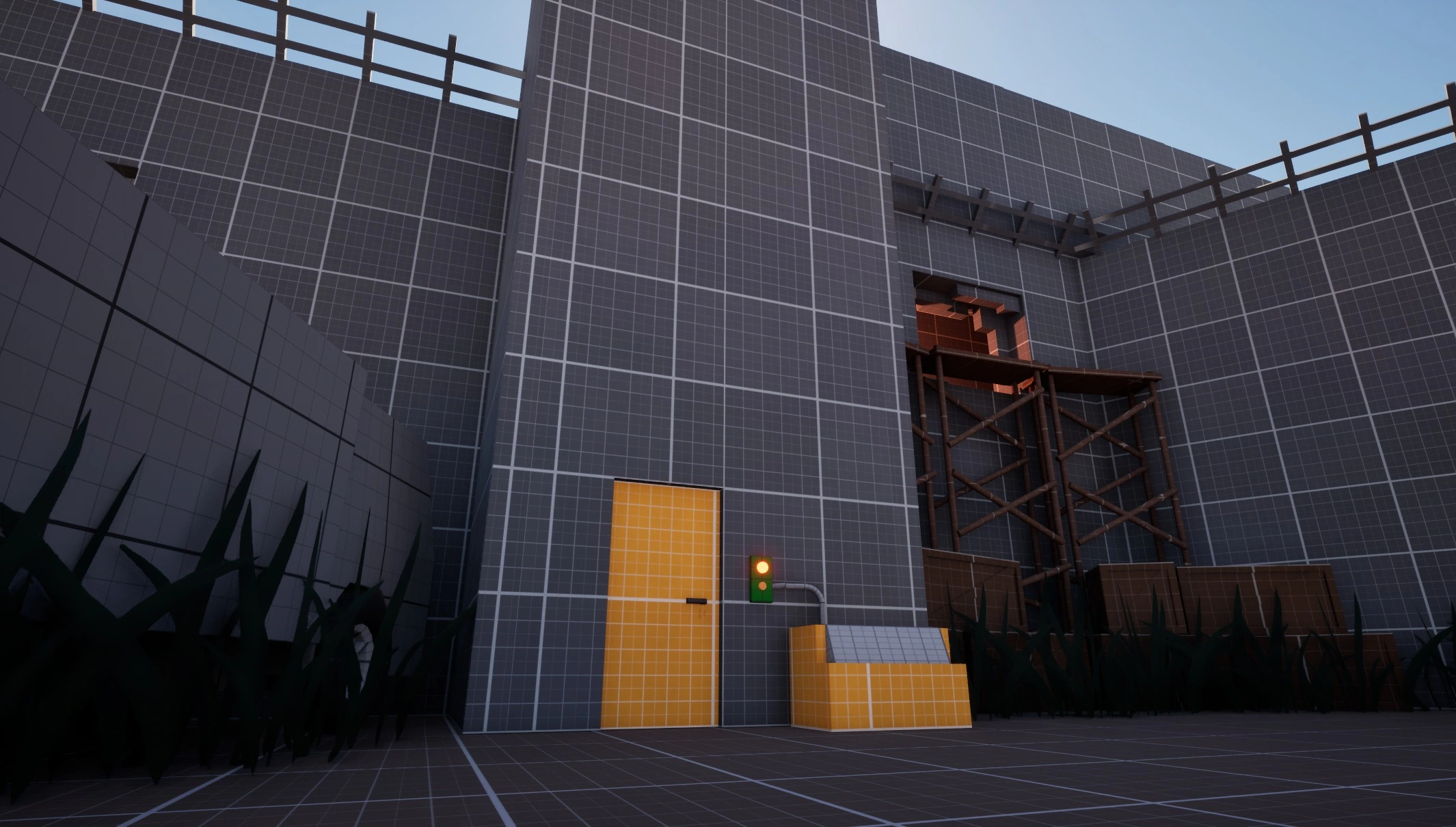
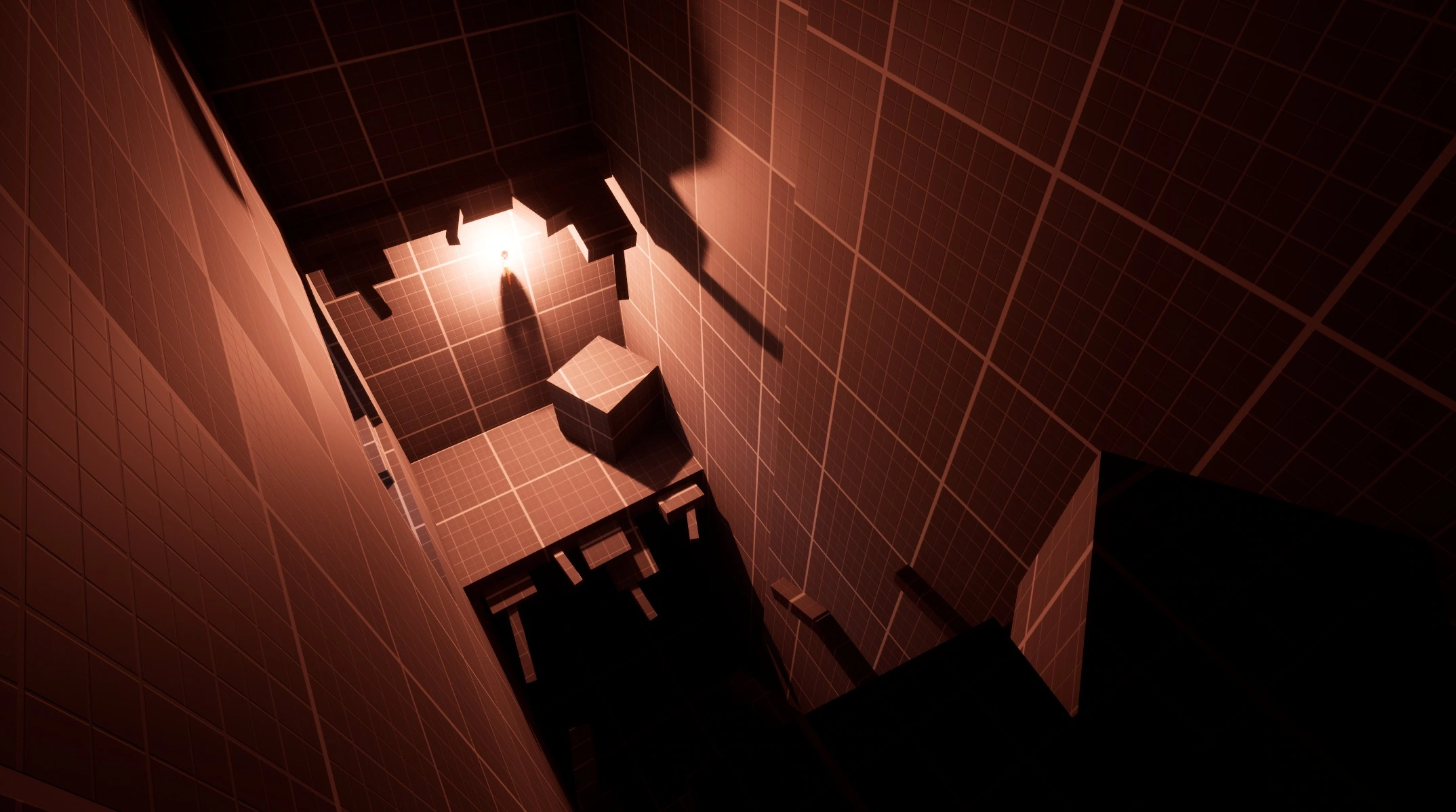
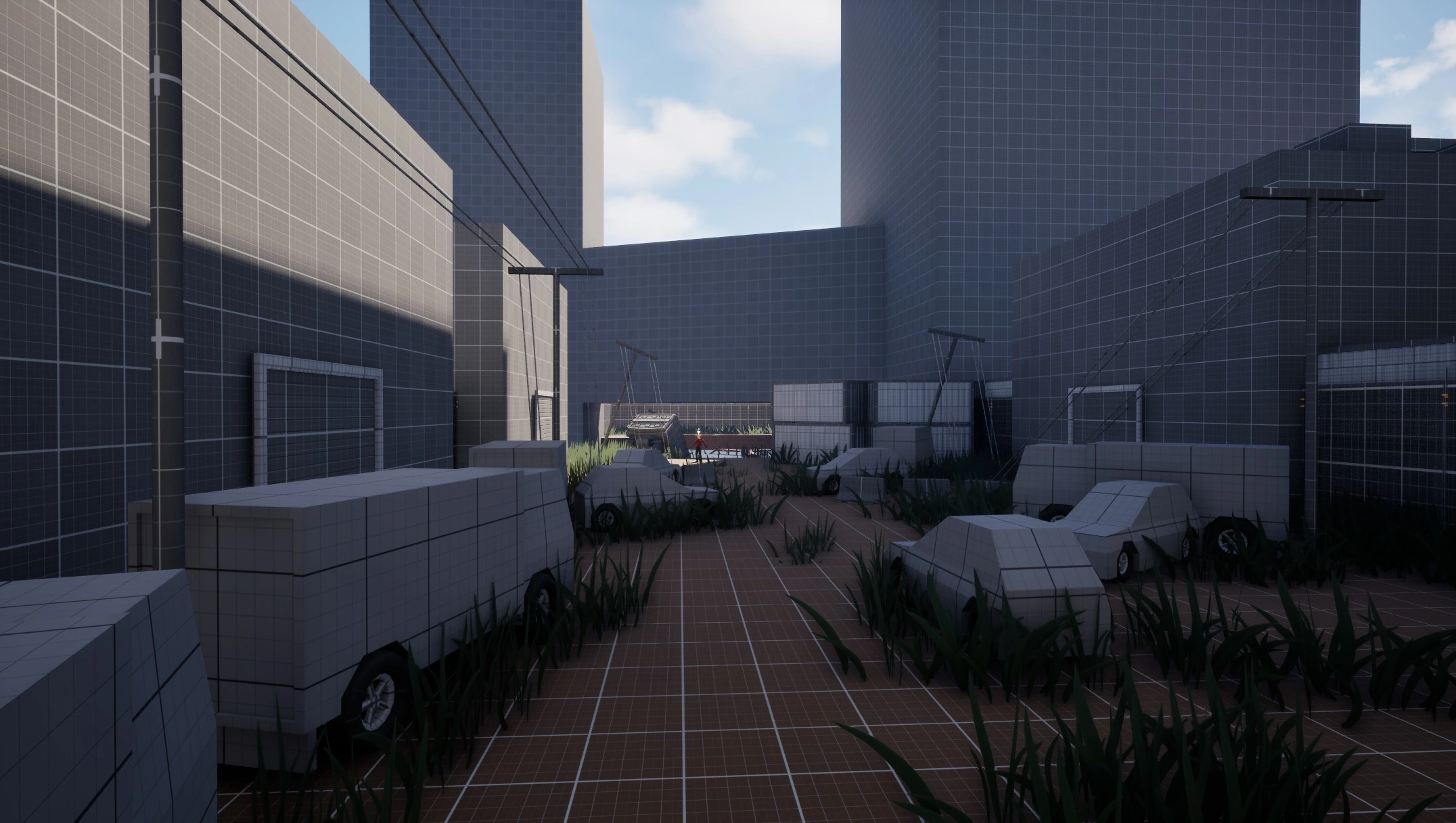
The route runs through eight areas. At the spawn point, three layers of guidance set the goal: the farthest, tallest building is the final objective; a breach that lets torchlight show from the Torch Building draws the player's curiosity; and a locked power door below it sets the goal for this section. A grey car hides part of the semi-open space so the player is not overloaded with information. In Hall A a single shaft of sunlight marks the pushable box, and in the windowless Cart Room light from a hole in the roof leads to a backpack and a magazine. Touching the power cart wakes human enemies, making areas the player has already explored dangerous again. The power door is the last puzzle of the first area.
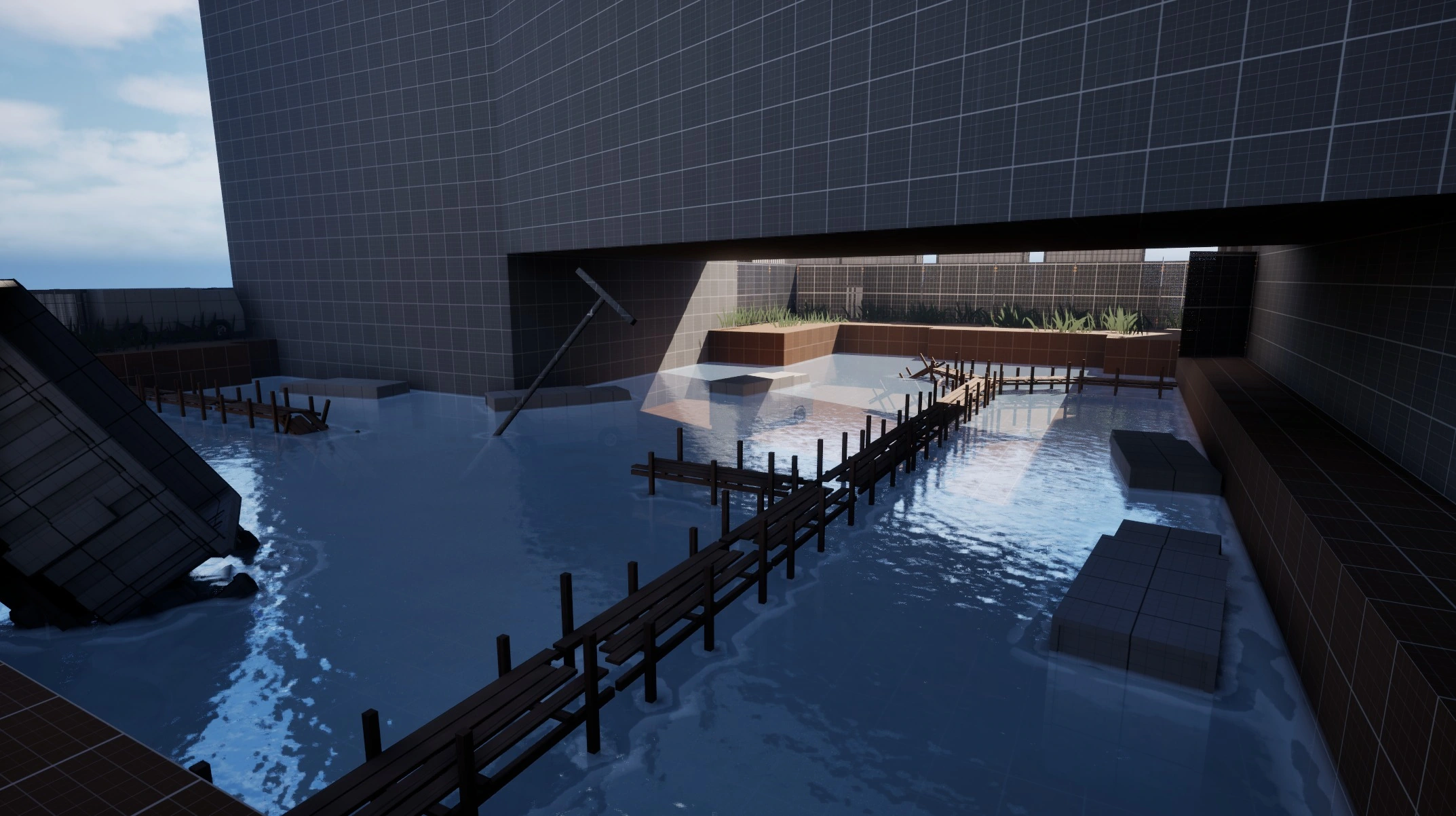
The Torch Building is narrow, dark and full of infected: the final test of combat. The Street that follows is calm, with few enemies and a scenic view that reminds the player they are in a post-apocalyptic world. The Sunken Yard rebuilds focus with narrow wooden planks over water, and the North Halls bring back three human enemies to raise the tension before the next challenge, which lies beyond this demo.
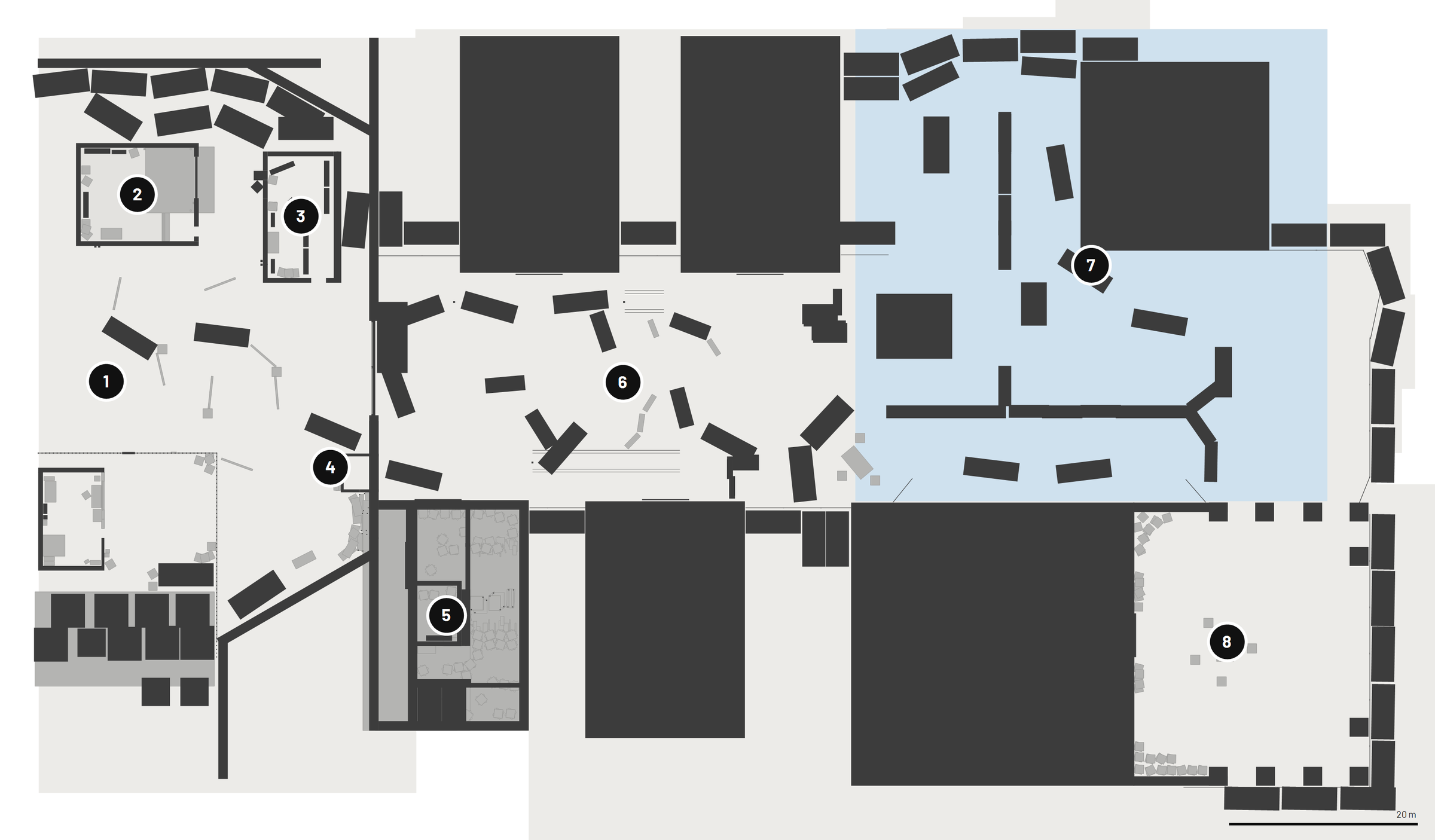
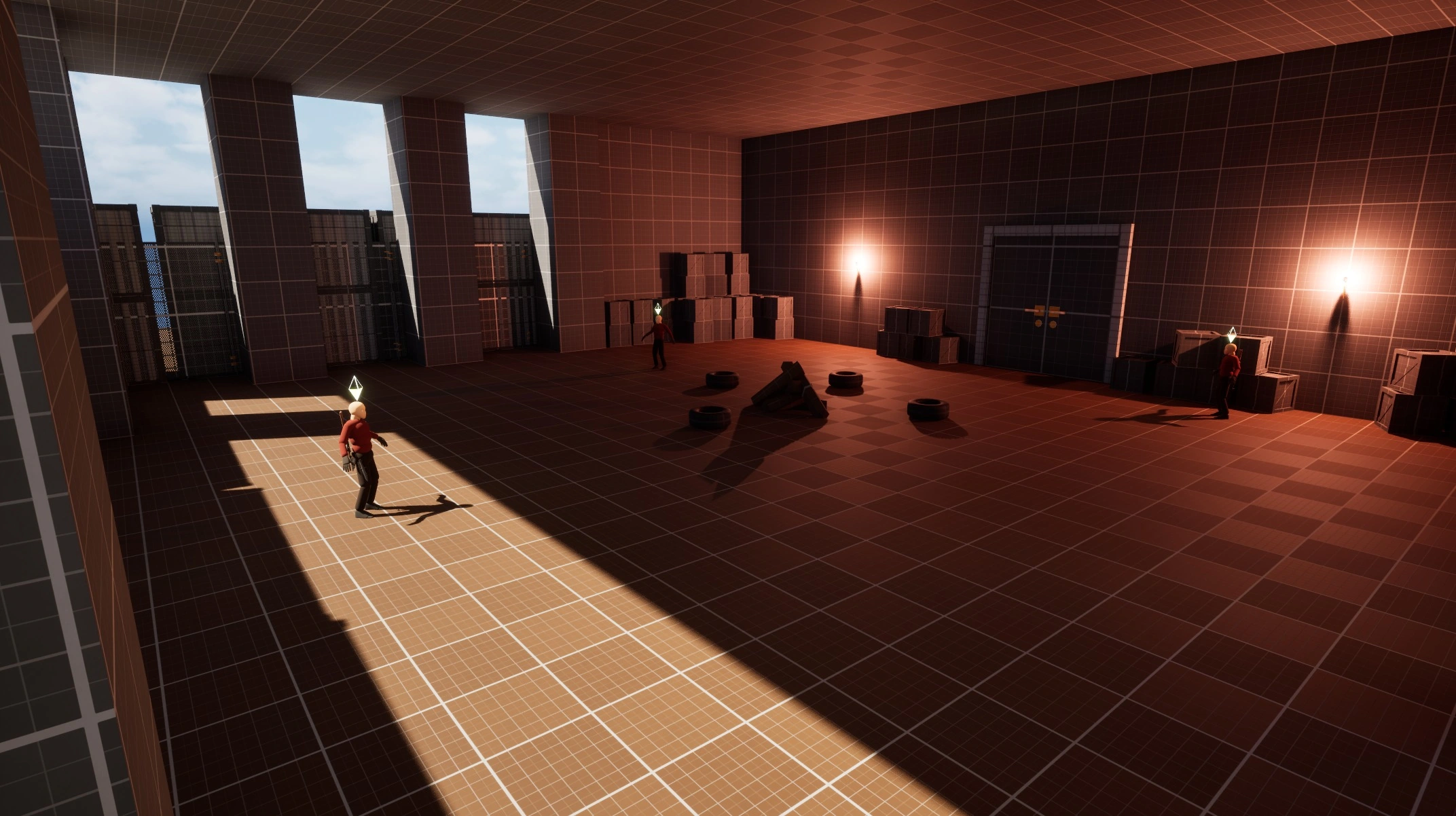
I drew a top-down plan from the level itself to check the route. In Blueprints I fixed bullets stopping at an invisible spawn-trigger box, a stutter on every zombie spawn, guards that left their posts and rifle reloads that lost rounds. I also made a fence unclimbable and added a floor ambush that wakes three guards when the player steps onto the boardwalk.
Level design breakdown
An eight-area route
The route moves from goal-setting and a power puzzle to a dark combat test, then rebuilds attention through quieter traversal. The top-down plan distinguishes chest-height walls in black, low cover in grey and water in blue.
1 · Spawn point
Three layers of guidance establish different scales of objective: the tallest building in the distance is the final destination; torchlight through a breach draws curiosity toward the Torch Building; a locked power door sets the immediate goal. A grey car partially hides the semi-open space to avoid presenting every route at once.
2 · Hall A
Opposite the Cart Room, a dark room contains one vertical shaft of sunlight. It marks a pushable box and the access route into the Cart Room.
3 · Cart Room
Light through a roof opening draws attention to a backpack and magazine. A red light on the power cart and nearby ammunition foreshadow danger. Touching the cart wakes human enemies in spaces the player has already explored.
4 · Power Door
The last puzzle in the first area resolves the local blockade and gives access to the Torch Building.
5 · Torch Building
Despite its name, it contains few torches. Narrow, very dark spaces and infected create the final concentrated combat test, using the flashlight and resource management established earlier.
6 · Street
A calmer stretch with few enemies gives the player a chance to recover and look at the wider post-apocalyptic setting.
7 · Sunken Yard
Narrow wooden planks over water rebuild focus after the easier Street section, shifting attention from combat to careful movement.
8 · North Halls
Three human enemies bring combat tension back. This is preparation for a further challenge in the next building, beyond the playable demo.
Blueprints and problem solving
The project uses GAS, StateTree, Behavior Tree and Blueprints. Debugging focused on keeping the route readable while removing interruptions to combat and traversal.
Bullets hitting an invisible wall
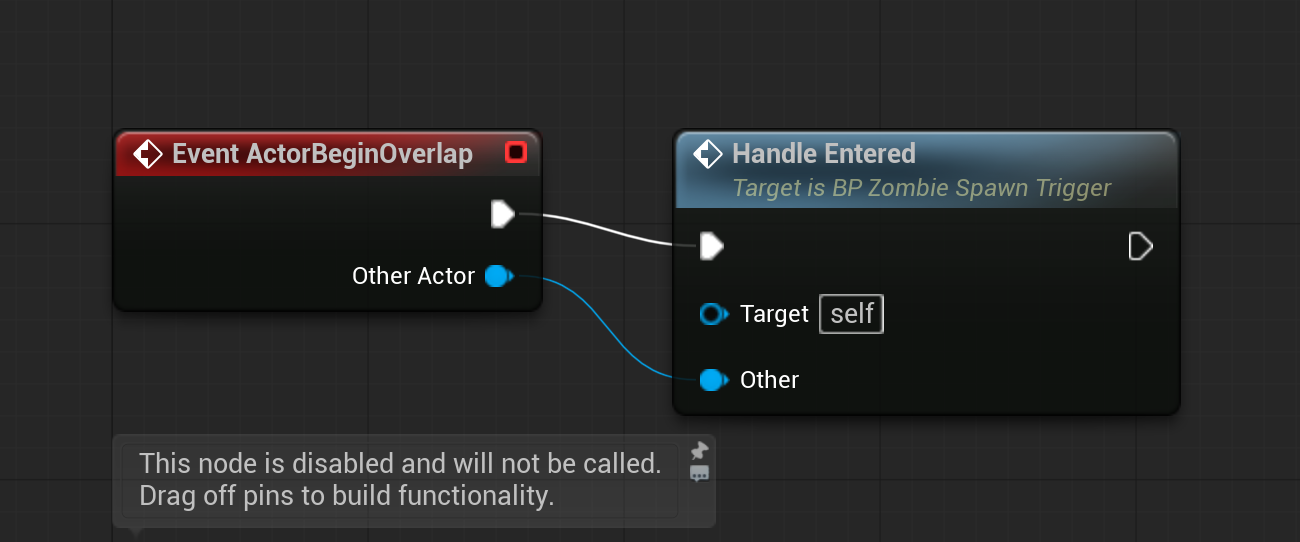
The zombie spawn trigger box still blocked projectiles after it fired. BP_ZombieSpawnTrigger disables its collision after activation.
Stutter when enemies spawn
Spawning rebuilt deformer buffers, with eleven zombies in the basement making the interruption visible. The project mesh copy lists the deformers in advance.
Guards leaving their posts
Guards now use two-point patrol routes with a long pause, holding their posts until they notice the player.
A boardwalk ambush
BP_FloorAmbush checks the surface beneath the player. Stepping onto the boardwalk wakes the three guards in the hall.
An unclimbable fence
A NoClimb tag identifies the fence. BP_NoClimbApplier removes it from climbing traces at startup.
Reloading without losing rounds
GA_ReloadRifle_AmmoPool uses a shared ammunition pool so that reloading fills the magazine without discarding the remaining rounds.
Project gallery
11 images · Click to explore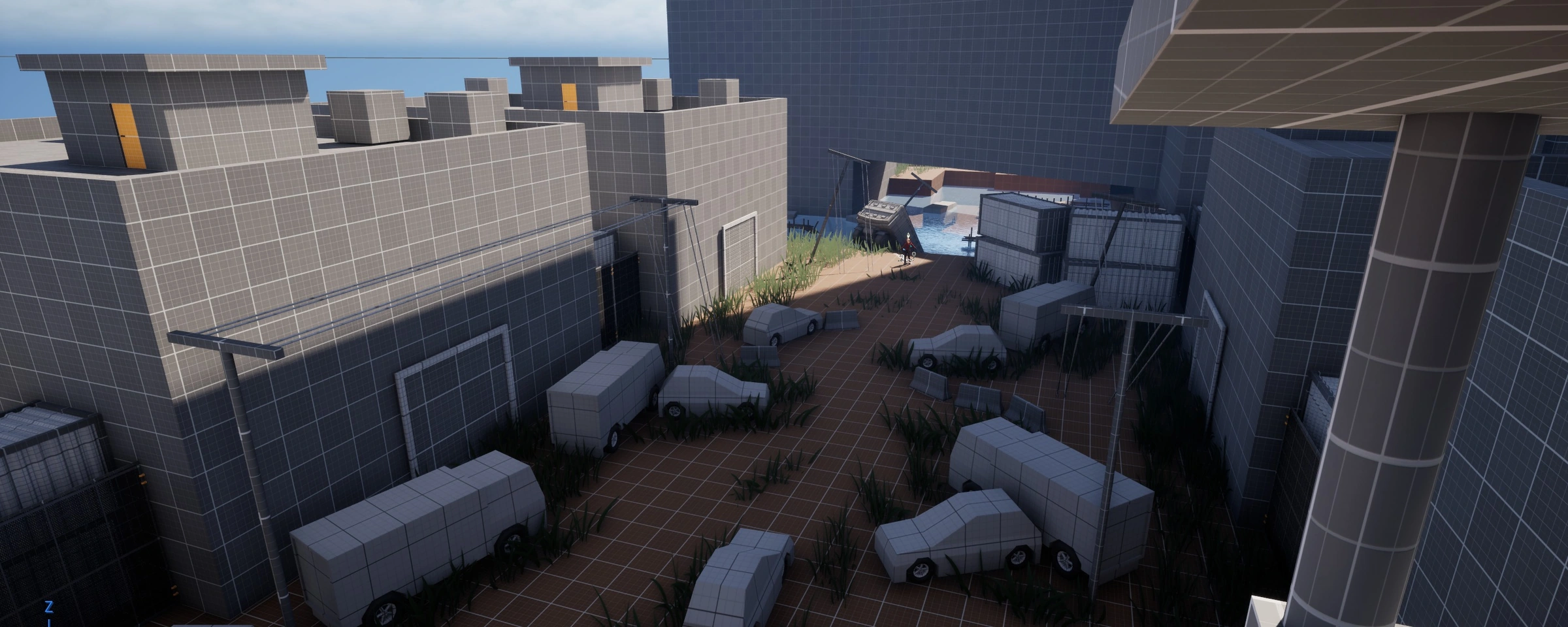
Result
A playable level of eight areas, with a top-down plan and Blueprint breakdown, shown in a play-through video.